

- 8-Minute Article
- |
- Apr 18, 2023
Delaying Retirement Could Have Health and Financial Benefits
Technology is changing where and how people work and could make it easier to work past retirement age.




Updated: April 1, 2026
- How can working past the traditional retirement age benefit my retirement strategy?
- How is technology helping people work longer?
- Does working longer have health benefits?
Not everyone is ready to retire when they reach age 65. Many people choose to work longer as part of their retirement strategy – giving them more time to save for retirement, helping them keep their minds sharp, and allowing them to maintain social interaction.
Number of Americans Working After Age 65 Continues to Increase
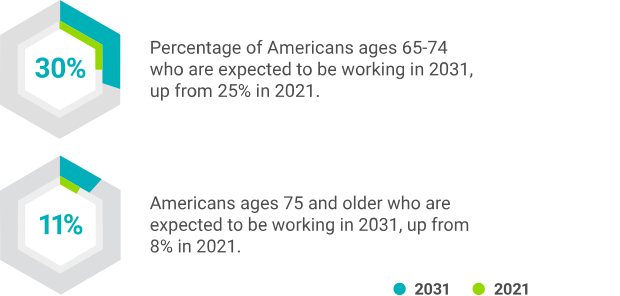
Source: Civilian labor force participation rate by age, sex, race, and ethnicity. U.S. Bureau of Labor Statistics, August 28, 2025.
While 30% of workers said they expected to retire at age 70 or older, only 9% reported doing so.1 Many retirees reported they actually retired between the ages of 60 and 64.1 Forty percent of retirees left the workforce earlier than planned, with 31% citing they left because of a hardship, such as a health problem or disability.1
As financial professionals and their clients discuss a timeline as part of planning for retirement, it’s important to be open and honest about the role that health plays and whether it could prevent working longer from becoming a reality. Additionally, there are implications for retirement strategies if there is any gap in perceived retirement age versus actual retirement age. These implications include:
- Fewer years to accumulate savings
- Reduction in Social Security benefits
- Loss of employer-provided health insurance
- Impact on future pension payments
The good news for those who may want to work longer is that the nature of work has changed. Physically demanding jobs, such as those in manufacturing, traditionally became more difficult as workers aged. Technology, a higher reliance on freelance and project-based work, and the increased acceptance of telecommuting could all benefit those interested in extending their careers or pursuing a new one as they near retirement age.
Technology Helps Make Working Longer a Realistic Path
As the economy shifts and relies more on technology, automation is expected to help businesses continue to streamline job tasks, which may aid older workers whose jobs will become less physically demanding. Data from the U.S. Bureau of Labor Statistics shows that the percentage of individuals who work beyond the traditional retirement age is steadily increasing.2
Gig Economy and Working From Home Trends Could Benefit Retirees
Due to the COVID-19 pandemic, the adoption of remote working policies driven by emerging communications technology increased.3 The pandemic showed that not only is working from home desirable for employees, but many employers became more comfortable with the concept. As of 2025, approximately 21% of the U.S. workforce – about 34.3 million Americans – work remotely at least part of the time.3 Studies show that with less time spent commuting, employees tend to work more, increasing productivity.3 At the same time, employers need less office space to accommodate their workforce when employees are working virtually, and may be able to save on costs by leasing less space. While some organizations have implemented return-to-office mandates, the prevalence of remote and hybrid work has stabilized and remains significantly higher than pre-pandemic levels.3
Employees May Save Money by Working Virtually

Source: 29 Insightful Hybrid Work Statistics [2025 Guide]. OfficeRnD, February 25, 2025.
The increase in employees who work from home doesn’t necessarily account for the rise in the gig economy – full-time freelancers and contractors, part-time workers, or entrepreneurs working out of their homes.
The total number of gig economy employees reported by different institutions can vary because some estimates only count contractors for companies, potentially skipping freelancers, ride-share drivers, and many others. There’s also the question of whether someone working multiple jobs as opposed to choosing to work as a contractor should be counted. Some consultants have estimated that gig employees could make up as much as half of the workforce by 2028.4
The rate of entrepreneurship among Americans over the age of 55 has steadily increased over time, representing over half of all business owners in the country.5 It’s important to note that starting a business while nearing retirement may require additional conversations between a financial professional and their client to help ensure that the client’s business can support their retirement strategies and cash flow.
Working Longer May Have Health Benefits
In the past, there have been concerns about older adults in the workforce facing a greater risk for injury or health problems. However, research concludes that working longer could actually have a positive impact on longevity and brain health.6
Staying active through work or purposeful activities can help protect against mental decline.6 High social engagement – including working, visiting with neighbors, and volunteering – is associated with better cognitive health in older adults.6
Social engagement is an important social determinant that plays a role in how health care professionals look at an individual’s overall health. While continuing to work can help improve health outcomes, there can be financial benefits too.
While every case may be different, research has shown that people who work past the traditional retirement age are not only better able to support themselves financially, but they remain healthier and live longer.6,7 As financial professionals and clients talk about plans to work longer, the impact of increasing longevity could be part of the discussion, as it may mean that retirement income needs to last longer.
The Financial Benefit of Delaying Retirement
Working a bit longer before retirement can have a significant positive impact on future retirement income. Research finds that delaying retirement and Social Security claiming can meaningfully increase retirement benefits.8 For example, when analyzing the impact of delaying Social Security from age 62 to 66, researchers found that the value of a couple’s total future benefits increased by approximately 7-9%.8 These gains come from receiving larger monthly Social Security checks, along with the additional years of earnings and continued retirement savings contributions that occur when working longer.
Financial professionals and their clients should also consider these other aspects of planning for retirement related to the choice of working longer:
- Have you determined the optimal age to claim Social Security benefits based on your health, longevity, and income needs?
- Will you still qualify for health insurance through your employer, and what is the impact of a transition to Medicare?
- How will any pension be affected by working longer?
- Does working longer give you the chance to grow your health savings account (HSA) balance by making additional contributions?
Even if a person’s health allows them to work longer, there’s always the chance of unexpected roadblocks, such as layoffs or a family need, that could call for adjustments to their plans for retirement. It’s important for financial professionals and their clients to remain flexible and prepare a backup strategy. For those who can take advantage of the new way of working and find positions that fit their lifestyles as they age, there may be many financial and health benefits.
Conversation Starters
Looking for ways to start a discussion about health conditions and their impact on health care expenses in retirement? Try these conversation starters:
- How do you plan to deal with a physically demanding or stressful job as you age?
- Do you plan to work longer to offset increased longevity and the rising cost of health care?
- How might your retirement income plan be affected if you’re unable to work longer?
- Share :