

- 6-Minute Article
- |
- May 03, 2019
Should Married Couples Consider Retiring at the Same Time?
Coordinating plans for retirement as a married couple comes down to a few key factors.




Updated: May 12, 2026
Created in Collaboration with Kiplinger.
- What tools are available to help me review my monthly expenses?
- How can a couple’s age difference affect their plans for retirement?
- What factors should I consider when determining when to claim Social Security benefits?
Many married people dream of being able to retire around the same time as their spouse. But is retiring together always the best plan? Or could staggering retirement dates make more sense? These can be important questions to ask, as timing is a major factor in retirement. After all, couples should consider how the decision to leave full-time careers may affect income, health benefits, lifestyle, and personal goals for both spouses.
Being aligned on your goals, finances, and expectations – and revisiting those conversations as circumstances evolve – can make a big difference. To help guide retirement timing, here are a few factors to consider.
The Financial Piece
It’s a question that all pre-retirees should answer: Do we have enough money saved to last and provide the retirement lifestyle we want?
Starting at least 5 years before their expected retirement dates, couples can work with a financial professional to help calculate their expenses. This is the monthly amount, net of taxes, that a couple needs to live the lifestyle they’ve worked so hard to achieve.
Once a portfolio is positioned to support your desired level of income, a joint exit from the workplace may become feasible. While retiring together is a common goal, the ability to do so depends on how well a couple’s financial picture aligns when the time comes.
Every couple’s expenses differ, so doing the math is essential to informed decision-making. With average annual household spending reaching nearly $79,000,1 retiring at age 65 vs. 70 may require significant after-tax income from a combination of Social Security, pension (if any), products offering guaranteed income, and personal savings.
Key takeaway: The earlier couples begin analyzing potential income and expenses, the more time they have to address any gaps in their plans for retirement.
Average Annual Consumer Expenditures
Ages 65 and older
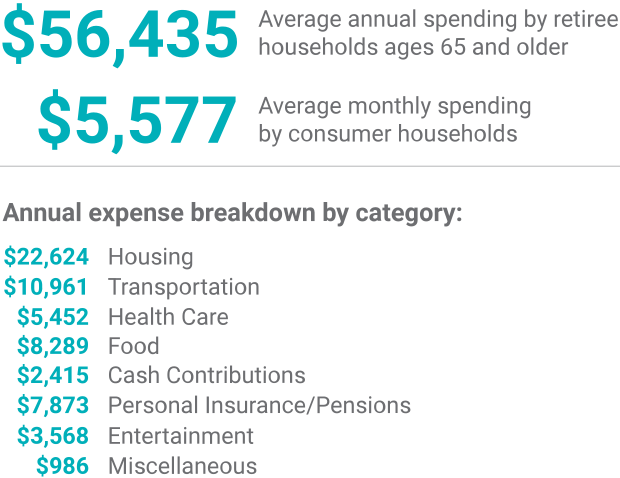
Source: 2024 Consumer Expenditure Survey data. Federal Reserve Bank of St. Louis, as of May 2026.
The Benefits Piece
Spousal health insurance benefits can also influence when couples decide to retire. Those with employer-provided health insurance, for instance, are more likely to work until age 65 when Medicare takes effect.2 But if one spouse is considerably younger than the other, that can be a big factor in deciding whether to retire together or separately.
Let’s say, for example, that the older spouse provides the couple’s health care coverage through work. Maintaining coverage for both partners as they age may mean choosing one of these options:
- The older spouse delays retirement until the younger spouse turns 65 and is eligible for Medicare
- The younger spouse enrolls in their employer’s retiree health insurance plan, if that type of benefit is available
- The younger spouse opts for an individual health insurance plan
- The younger spouse seeks employment where employer-sponsored health insurance benefits are available
- The younger spouse temporarily uses COBRA to extend employer health coverage (for qualifying employers, COBRA allows spouse and dependent coverage at full cost for up to 18 months after leaving a job)
Social Security is part of the decision too. That’s because waiting to claim benefits until after full retirement age (67 for those born in 1960 or later) will increase monthly payments by about 8% per year, up to age 70.3 You’re eligible to file for Social Security as early as age 62, but benefits will be permanently reduced.4 To maximize their benefits, many married couples claim benefits for one spouse at full retirement age but delay the other spouse’s claim, which allows that second benefit to grow.
The Impact of Age on Claiming Social Security
Here’s how the age you begin taking Social Security can affect the amount of your monthly benefit. A $1,000 retirement benefit at full retirement age would decrease or increase to:
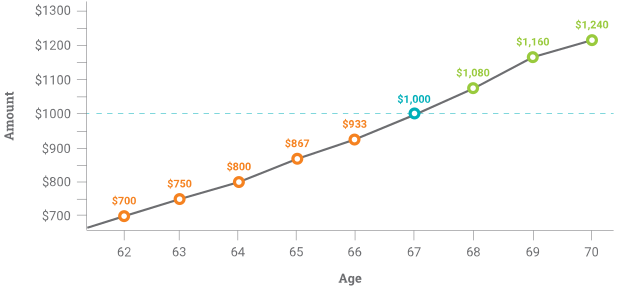
Source: If you were born between 1960 or later, your full retirement age is 67. Social Security Administration, as of May 2026.
Age differences can play a key role here as well. Studies show that women in heterosexual couples are typically about two years younger than their male partners.5 Additionally, women tend to live longer than men.6 As a result, women may be more likely to run out of their retirement savings. Working longer could give couples more time to save for retirement and also decrease the time spent depending solely on Social Security income.
Key takeaway: Married couples with big age differences may need to consider planning for different retirement dates – and weigh the impact of this scenario on key benefits and retirement portfolio strategies.
The Emotional Piece
Each person likely has his or her own vision of retirement, and partners aren’t always in sync. Some couples may be ready at the same time but have different lifestyle expectations. One of the most common mistakes couples can make is not discussing what retirement should look like for both of them. This lack of communication could lead to misaligned assumptions about everything from where you’ll live to what your roles will be to how much time you’ll spend together.
“If one person says, ‘My work isn’t giving my life meaning and purpose; I’m done,’ but the other one says, ‘I’m really invested in my work and love it,’ they shouldn’t retire at the same time,” Dr. Geber explains.
Some couples may be ready at the same time but have differing lifestyle expectations. “The most common mistake I see people making is not talking to their spouse about what retirement should look like,” she says. This lack of communication often leads to some erroneous assumptions about everything from where you’ll live to what your roles will be to how much time you’ll spend together.
To make sure both individuals are on the same page, it’s helpful to talk about balancing each other’s views early and often. The idea is to pinpoint and address any conflicts before you retire.
Planning for Change
When choosing whether to retire together or separately, also think about how feelings and priorities may change in the future. A couple who chooses to stagger their retirement now may regret that decision later if unexpected events prevent them from enjoying the experiences they had planned together. Another couple may enjoy more time together early on but miss the additional savings later that working longer could have provided.
Key takeaway: Many couples choose to begin their journey into retirement together, but there are several points to consider as that decision comes into view. Talk with your financial professional about these details so you’re better prepared to make a decision that’s right for both of you.
- Share :